Australian NF Research Shines on the World Stage
August 04, 2026
News from the 2026 NF Conference in the USA for Health Care professionals.
Click here to read the update for patients and carers.
The NF Conference organised by CTF USA is an annual event, highly anticipated every year by the international community of clinicians, researchers and health care professionals around the world. In line with its motto ‘Ending NF through Research’, CTF USA is proud to name this scientific meeting ‘the premier global meeting for NF research and clinical care’, attracting the world’s leading professionals in NF-related research, clinical practice and drug development.
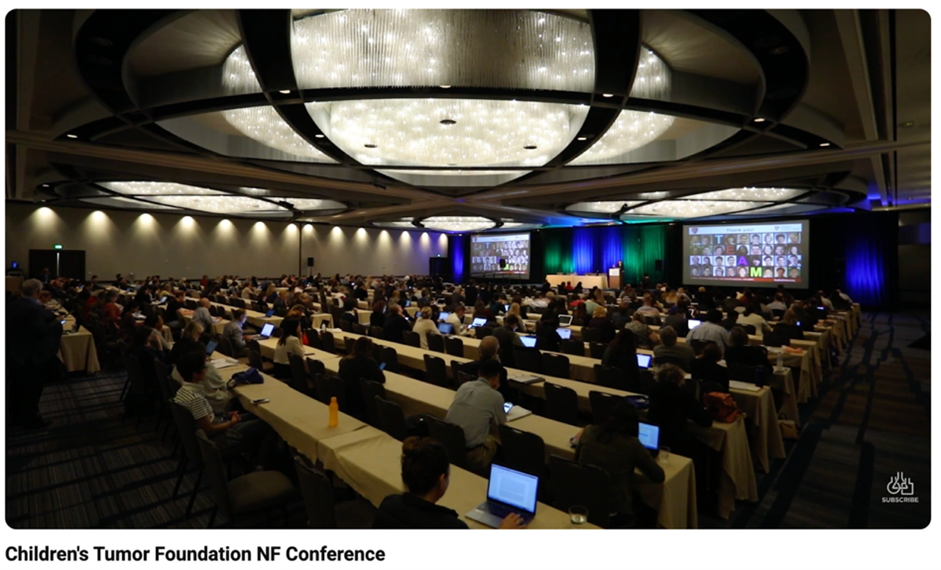
This year was no exception and according to the conference organisers the turnout was ‘exceptionally strong’. As in previous years, Australia was well represented with several Australian NF experts from different clinical disciplines invited to share their research, knowledge and ideas.
“ A great conference is not measured by the program it prints, it is measured by the number of collaborations it sparks, the ideas it unlocks and the hope it gives to families who are waiting ”
- Annette Bakker, PhD CEO, CTF USA
How to read this article
This article provides a reflection for the wider health care sector on presentations, discussions and emerging research shared at the 2026 NF Conference organised by the Children's Tumor Foundation (CTF)-USA. It is written with Australian allied health professionals in mind, who may like to hear about current scientific developments in NF research and care.
Some of the research touched on is well established, while other work is in the early stages of development. It is important to remember that:
- Not every research finding will be relevant to every person with NF.
- Promising early results do not always lead to new evidence-based treatments or changes in clinical care.
- Access to new therapies may vary between countries and over time.
- Research findings should not be used as a substitute for personalised medical advice.
If you would like to understand whether any of the research topics discussed here are relevant to your professional development, we encourage you to discuss them with your healthcare team.
The extent of NF research is growing
For long, NF research has revolved around tumour biology and the identification of genetic mutations responsible for NF1, NF2-SWN and SWN. This to enhance our understanding of NF-related tumour type, origin, growth and progression from benign to malignant forms of cancer. While this focus remains important and continuous to contribute significantly to progress in the field of NF, this year’s scientific program equally supported the broader notion that impactful care and management of NF goes beyond cancer treatment. There is an urgent need to include many other manifestations of NF which directly affect a patient’s daily life. As a result, exciting new conference sessions led by clinicians and clinical neuropsychologists among other research experts, were dedicated to the implications of an NF diagnosis on the quality of life and general health of children and adults with NF.
It was the first time that research insights into tumour-related pain, NF1-related metabolic dysfunction, bone health and brain development (too often shaping child development with impairments in cognition, learning and socially accepted behaviour) were shared and discussed. These NF-related manifestations can affect education, employment, relationships, independence and overall well-being, and according to the organisers, deserve to be studied with the same ‘scientific rigour and clinical attention as tumour-directed therapies receive’. Several NF1 specialists from Australia made an impact as part of this move to broaden the research field and shine a light on the challenge of living with NF and the burden of uncertainty it comes with.
Australian researchers help broaden progress in NF
Dr Natalie Pride, clinical neuropsychologist at The Children’s Hospital at Westmead in Sydney, proudly oversaw the first ever session on sleep at the NF conference. Together with co-chair James Walker, she managed to convene a mix of experts ranging from basic scientists to clinical researchers with the aim of bringing together clinical, genetic and basic science of sleep in NF1. Informative outcomes from fruit fly (Drosophila) models to uncover the cellular mechanism and neural circuitry underlying sleep and circadian activity were presented to complement human cohort studies analysing sleep health and sleep disorders in NF1. Both approaches are necessary to move forward, and the evidence is mounting to justify routine screening of sleep behaviour and sleep quality as part of NF1 care.
Dr Jonathan Payne, clinical neuropsychologist at the Murdoch Children’s Research Institute in Melbourne, was invited to participate in two expert discussion panels on the topic of brain development and the neuropsychological implications of NF1. A timely scientific debate tackled the issue of translating research knowledge into practice, in other words how NF1 care can be improved with the inclusion of neuropsychological support and assessments of cognitive health. Another equally important educational discussion was built around case presentations across development from infancy to adulthood. This clever approach illustrated to a clinical care professional audience when clinical neuropsychologists would be alarmed, what functional impairments may benefit from intervention and which windows of opportunity could be used for focussed support. Awareness of unique NF1 trajectories when growing up is likely to enhance comprehensive care, and it appears that ‘Transition of Care’ programs during teenage years, like offered by the NF1 clinic in Melbourne, could be well suited to address these challenges.
Dr Alexandra O’Donohue, postdoctoral research fellow at the University of Sydney, was invited to present her research on bone porosity in NF1. Her talk formed part of the new session on systemic metabolism in NF, which aimed to cover various types of altered metabolic functions throughout the body. To address the issue of NF1-related skeletal dysplasia, like scoliosis among others, Dr Donohue used a genetically manipulated animal model, to be specific a limb-targeted Nf1 knockout mouse, to look for ways to rescue bone porosity. One potential option in the absence of NF1 may be a dietary intervention with amino acid derivative L-Carnitine, known to be involved in cellular energy metabolism. Another reason for her to travel to the conference was to attend the Young Investigator Day as a recipient of last year’s Young Investigator Award by CTF USA. This satellite meeting was a closed session for early career researchers, and it provided a platform for Dr Donohue to present her other line of research, her CRISPR-based gene editing work geared towards correcting NF2 mutated variants with gene therapy.
Pain is finally getting the attention it deserves
Another important first worth mentioning was a dedicated session on the complexity and burden of pain in NF1 and NF2-SWN. The speaker group included pain management specialists, a patient advocate, basic scientists and clinical trial researchers. Together, they contributed to three important themes: how to best measure pain, how to treat pain and how to have hope with growing research studies into the underlying biology of pain. Pain is recognised to contribute to sleep deficits, reduced quality of life and severely affects NF patients with neurofibromas and schwannomas.
You may be interested to know that pain is also at the forefront in continued analysis of the data in the KOMET and ReNeu clinical trials, which led to the availability of MEK inhibitor selumetinib (Koselugo has been TGA approved for the treatment of children in Australia) and mirdametinib (Gomekli is in the process of TGA approval in Australia) to treat plexiform neurofibromas. Revisiting the original data set in the KOMET trial focussed on pain (perception, intensity, interference, chronic pain medication use) as a secondary outcome of the treatment in NF1 for plexiform neurofibromas. The findings confirmed that selumetinib reduced the impact of pain in a clinically meaningful way and helped patients to better function on a day-to-day basis with less extra pain medication. Similarly, re-analysis of the ReNeu trial data prioritised the issue of NF1 tumour related pain over the drug effect on tumour size. The findings here showed that mirdametinib treatment reduced the perception of pain on a self-reported pain severity scale as well as pain interference in daily life. The improvements were noted relatively early and sustained during the trial period.
Inspiration to ‘think outside the box’
As is routine, the conference program included several keynote lectures to introduce different research themes on each day. The organisers bravely invited inspiring leaders of research from outside the specialised field of NF with the purpose of inspiring the NF research community to think outside the box. The take home message would be as follows:
- Chemistry expertise can help effective new drug discovery by using the characteristics of naturally occurring molecules to develop synthetic (artificial) anticancer elements for therapy with better outcomes.
- Based on ground breaking work in other types of tumours, pioneering efforts in genomic engineering can lead the way to promising new cancer immunotherapy in in NF.
- A cell metabolism focus on how tumour cells generate enough energy to growth and multiply can refine our currently held thoughts on NF cell biology.
- Biochemistry knowledge of the microenvironment of tumour cells can better inform NF-research on the role of the extracellular matrix, an organic scaffold of molecules that holds tissue cells together, supports and regulates them. One of its components is hyaluronan, attracting special attention as a new therapeutic target for peripheral nerve tumours.
What does all of this mean for the NF community in Australia?
Overall, this global gathering of NF experts, drug discoverers and innovators created fertile ground for scientific debate to move forward in NF. The scope of the conference program was enormous and seemed to have left no aspect of NF untouched. It covered a vast array of new research undertaken in NF-related biology, tumorigenesis and other life-challenging adversities, therapeutic discovery and technology, as well as NF clinical management, care, and education – no doubt there was something worth hearing and sharing for everyone. As such, the meeting presented a perfect global platform for invaluable cross talk between research disciplines.
Conferences like this tend to trigger further collaborative project development, in which roles for Australian research and expertise are justified and deserved. CTF AU will continue to engage with Australian NF specialists and researchers to the benefit of our patients with NF, their families and health carers.
For a recap of the 2026 NF conference, check out CTF’s summary video here.
For details of CTF USA and its annual scientific conference, follow this link.
Stay tuned
This news coverage will be followed by a series of more in depth coverage of selected research presentations placed in context. The studies of choice will be based on recommendations by Australian NF experts who attended the 2026 Conference in the USA, and are believed to be of interest to the NF community.
There will be separate versions for patients & families, and health care professionals.
This article was written by
Anke van Eekelen
Research Volunteer

Share this article