Get to know NF Researchers in Australia - Professor Jonathan Payne
November 02, 2026
Get to Know NF Researchers in Australia
A series of interviews with speakers at the 2026 NF Conference (USA)
Professor Jonathan Payne
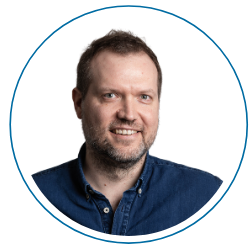
CTF Australia is excited to introduce Prof Jonathan Payne to our NF community. He is a clinical neuropsychologist and has extensive experience in the field of NF1, gained over 18 years of working with children and adults with NF1. He is also a long term supporter of CTF in Australia
Prof Payne co-leads the Brain and Mind research group at the Murdoch Children’s Research Institute in Melbourne, where he steers a diverse research program geared towards better understanding, targeting and improving the treatment of neurodevelopmental difficulties associated with NF1.
Attending the NF Conference 2026 allowed him to contribute to different expert panel discussions centred around brain development in NF1 and how learning and behaviour difficulties can change through child and adolescent development.
We thank Prof Payne for this related interview and the opportunity to read what inspires him to help patients with NF1 and their families.
“I’d like every child with NF1 to have their learning and behaviour checked early and regularly, so difficulties are picked up before a child starts to struggle at school.”
What is your specialist expertise and NF research focus?
I’m a clinical neuropsychologist, and I lead the Genetics and Neurodevelopment team within the Brain and Mind research group at the Murdoch Children’s Research Institute. Our goal is to transform how we understand and care for children with learning and behaviour difficulties associated with NF1.
My research program focuses on five key areas:
1. Understanding the clinical problem and how to measure it
This includes describing the learning, attention, behaviour and social difficulties children with NF1 face, and developing better ways to assess them.
2. Improving prediction
My research team attempts to identify early which children are most likely to grow into having difficulties, so support can start as early as possible.
3. Understanding why these difficulties occur
We use brain imaging and laboratory models to uncover how changes in the NF1 gene affect brain development.
4. Identifying promising treatments
We draw on what we learn about the biology to find treatments worth testing.
5. Clinical trials
We test whether new treatments can improve learning and behaviour in children with NF1.
Much of this work is done in close collaboration with researchers in Australia, but also internationally, with those in the US, UK and Europe. NF1 is a rare condition, so no single clinic or country can answer these questions alone.
How did you become interested in NF?
My interest in NF1 began when I moved from Melbourne to Sydney after completing my training to take up a postdoctoral position with Professor Kathryn North, one of the world’s leading NF1 clinician-scientists. Working with her and the clinical team at The Children’s Hospital at Westmead, I saw firsthand how much learning and behaviour difficulties affect the lives of children with NF1 and their families, often more than the physical features of the condition.
What has kept me in the field is the scientific opportunity. Because NF1 is caused by a change in a single gene, it gives us a rare window into understanding how a single gene can impact on the way the brain develops. About half of children with NF1 have ADHD symptoms, and many have learning difficulties, autism features or anxiety. Studying NF1 lets us trace these difficulties back to their biological cause. That helps children with NF1 directly, and may also tell us something about these conditions more broadly.
After eight years in Sydney, I returned to Melbourne in 2015 to join MCRI, where I’ve continued this work ever since.
In your view, how significant is it for NF researchers to have an annual international scientific conference on NF?
It’s essential. NF research teams are spread across the world, and for researchers in Australia, the distance can be a real barrier. The NF Conference is where clinicians, scientists, families and funders come together in one room. Many of my most productive collaborations have started with a conversation at one of the annual CTF meetings in the US.
It also matters for speed. Findings presented at the conference often won’t be published for another year or two, so being there means we hear about new results early and can build on them straight away.
You travelled to the United States to attend the 2026 NF Conference in person. Can you share with us how you contributed to the conference program?
I contributed to the conference in a couple of different ways.
First, I was invited to join a panel in the Clinical Care Program, a dedicated session for clinicians held alongside the main conference. Together with colleagues from Children’s Hospital Colorado, Boston Children’s Hospital, Children’s National Hospital, and the University of California, we followed the neuropsychological journey of a person with NF1 from infancy through childhood and adolescence into adulthood. We discussed how learning and behaviour difficulties can change over time, what to look out for at each stage, and how care and support should adapt as children grow up and move into adult services.
Second, I was invited to join an expert panel in a special session on brain development in NF1, alongside colleagues from the US and UK, including my long-time collaborators Dr Karin Walsh and Dr Shruti Garg. We discussed one of the big challenges in our field, which was how to translate neuropsychology research into better clinical care for children with NF1. During that session, I introduced a new concept my collaborators and I have developed that we’ve termed “NAND”, which stands for NF1-Associated Neurodevelopmental Difficulties. Many children with NF1 fall just short of the threshold for a diagnosis like autism or ADHD in any single area, yet their difficulties add up and have a real impact on daily life. NAND recognises that pattern, and we’re now developing a questionnaire to assess it.
This year’s program included new sessions dedicated to NF manifestations other than tumour development. Can you comment on the value of these new opportunities to discuss research on aspects of NF known to impact on quality of life, education and behaviour?
Tumours understandably receive a lot of attention, but when you ask families what affects their child’s day-to-day life most, learning and behaviour difficulties are often at the top of the list. Up to 80% of children with NF1 have some kind of cognitive or behavioural difficulty.
In addition to these areas, there were sessions on bone health, metabolism, pain, and sleep.
This breadth is important giving the wide-ranging effect NF1 can have and giving these topics their own sessions helps to shine the spotlight onto them and raise the profile of the issue among researchers, clinicians and the NF community.
What was your overall impression of the 2026 NF Conference?
It was a great conference. I believe there were approximately 1000 attendees there in one place, all with their own areas of expertise, focused on the one condition.
I was also struck by how collaborative the field has become. Many of the most exciting studies pooled data or expertise across countries, which is essential for a rare condition. It was great to see a strong Australian presence too, with researchers from Sydney and Melbourne presenting work on topics from sleep to bone health.
Finally, it was lovely to see so many early-career researchers there from across the globe. Their energy and fresh ideas bode well for the future of NF research.
Can you recommend a conference research presentation which the NF community may like to hear about? Why would this be of interest to them?
I’d recommend Dr Yang Hou’s presentation from Florida State University. Dr Hou combined data from more than 1,000 children with NF1 from nine specialist centres in the US, UK and Australia. She found that children fell into four broad groups: an average functioning group (35% of children in the study), a cognitive difficulties group (32%), a behavioural difficulties group (24%), and a combined global cognitive and behavioural difficulties group (9%).
I believe families will find this interesting for a couple of reasons. First, it shows that about a third of children with NF1 don’t have significant learning or behaviour difficulties. Second, it shows that the type of difficulty matters, because children with mainly learning challenges and those with mainly behaviour challenges are likely to benefit from different kinds of support. That has immediate relevance for how we assess and support children in the clinic.
What would you like to see happen for the NF patients in Australia?
What I’d like to see happen in Australia is consistent, high-quality care for every person with NF1, wherever they live. At the moment, there are currently only handful of specialist NF clinics in the country, all in Sydney and Melbourne. CTF Australia’s 2024 Health and Social Impact Assessment found that many Australians with NF1 have poor access to specialist care with many in rural areas travelling more than 400 kilometres to see an NF specialist.
That’s why I’m excited to be working with CTF Australia and leading clinicians and researchers across the country to develop a national model of care for NF1 in Australia, so that the level of care doesn’t have to depend on where you live.
My own focus is on improving care in the neurodevelopmental space. Learning and behaviour difficulties are among the most common features of NF1, yet access to neuropsychological assessment is especially limited outside the major cities. I’d like every child with NF1 to have their learning and behaviour checked early and regularly, so difficulties are picked up before a child starts to struggle at school. Our research is working to make that possible by developing a single NF1-specific assessment tool that could be used to screen for difficulties in any clinic.
Longer term, I’d like to see treatments that target the specific cause of the learning and behaviour difficulties in NF1, not just support around them. Our laboratory work is helping to find them. Using stem cells grown from people with NF1, we can create models of a child’s brain in the lab. That lets us study how NF1 affects brain development and test potential treatments in the model before they reach patients. Australia is part of the international NF Clinical Trials Consortium, so when those treatments are ready to be tested, Australian families will be able to take part.
You can read a summary of the expert panel discussion on brain development and the presentation on neurodevelopmental phenotypes in NF1 aimed at patients and carers here.
Or you can read a summary of the expert panel discussion on brain development and the presentation on neurodevelopmental phenotypes in NF1 with more scientific detail aimed at health care professionals here.
This article was written by
Anke van Eekelen
Research volunteer

Share this article