NF2-SWN: AI-assisted tumour imaging for the better
September 27, 2026
A research summary for Health Care Professionals
The information provided below is a summary of a recent research study on NF-2 Related Schwannomatosis (NF2-SWN) at the 2026 NF Conference in the US. This inspiring presentation features the latest research project by Dr Frank Buono from Yale University.
Click here to read the summary for patients and carers.
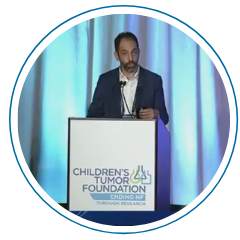
As the science communicator of this series on updates from the 2026 NF Conference, I would like to draw attention to a special conference session on NF2-SWN, which focussed on a range of research projects with potential clinical impact and promising opportunities for the translation of new research findings into practice.
The talk by Dr Buono on an improved approach to MRI tumour assessments in NF2-SWN was part of this session. It attracted special attention from the conference organisers at CTF in the US, who included its significance in their 2026 NF Conference Recap as follows:
“A new AI tool shows potential in measuring NF2-related tumor growth on an MRI in about a minute, compared to up to an hour by hand, and it has the potential to detect subtle growth that traditional methods may miss.”
AI-based 3D volumetrics enhances quality of imaging in NF2-SWN
Dr Frank Buono has a strong research interest in the burden of disease measurements, in particular the burden of tracking vestibular tumour growth in patients with NF2-SWN. He is in a unique position to study this specific topic from different perspectives: he himself is a NF2-SWN patient, he is also a qualified clinical psychologist and he leads a clinical research lab at Yale University.
MRI (magnetic resonance imaging) is considered the gold standard for the evaluation of tumour progression in NF2-SWN at every check-up of the patient, which can vary between months to 2 years depending on the severity of the case.
The standard approach to estimate tumour size at each follow-up is MRI including 2D volumetrics based on linear measures of length and width at the largest cross section as determined by the neuro-radiologist interpreting the images.
Dr Buono emphasised several concerns with this method. It can overstate tumour volume and it does not acknowledge the often irregular shape of vestibular tumours in NF2-SWN, nor the highly variable, sometimes intermittent rate of growth over the years.
3D Volumetrics addresses these concerns. Here, tumour volume is constructed by segmenting all areas across all MRI slices, generating a far more precise 3D representation of the actual tumour shape and its spatial position among surrounding structures. But realistically, its demanding clinical use is hampered by the hours it takes to scan a patient.
According to Dr Buono, this is where artificial intelligence (AI) can help. He and his team developed AI-assisted 3D Volumetric software (Defin3D) for serial imaging in patients with NF2-SWN.
The technique is more objective, consistent and set up for longitudinal evaluation. Importantly, it also reduces the length of assessment time from hours to minutes and allows for comparison of new images with those taken at previous appointments.
While excited about its many benefits for patients with NF2-SWN, he is acutely aware of the reservation patients may have regarding the AI-component of the new screening approach he advocates for.
So he interviewed 60 patients to understand their cautiousness with or fear of AI, among other matters concerning the burden of undergoing regular MRI screening of NF2-schwannomas over time. In their view, AI in healthcare may be useful as a supportive tool. Yet there also seems reluctance to trust the analysis of tumour progression if operating without human involvement.
With this in mind, Dr Buono continues to optimise his AI-assisted 3D Volumetric software for use in the clinic as well as research clinical trials. Key to his efforts are training, testing and validating the model, which meets the important aspect of patient trust in a system helped by AI but overseen by the specialist clinician.
His presentation illustrated where AI can help to improve MRI evaluation of NF2-related schwannomas, without overreliance on AI to automate the model. For those interested in more detail, his progress over the last 4 years has been published in several peer-reviewed articles.
Dr Buono was Invited to speak at the conference as someone knowledgeable on the topic with the lived experience of having to be monitored regularly for tumour progression. This certainly brought an extra dimension to the introduction of his newly created AI-assisted software with the potential to upgrade tumour growth assessments in clinical settings and research trials.
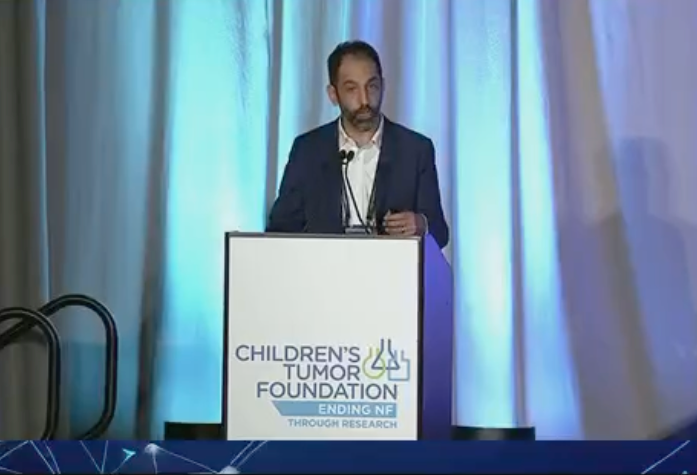
Speaker at the 2026 NF Conference: Dr Frank Buono
This article was written by
Anke van Eekelen
Research volunteer
Share this article