Get to know NF Researchers in Australia - Kylie Clark
November 28, 2025
Get to Know NF Researchers in Australia
A series of interviews with speakers at the NF Clinical Symposium 2025
Kylie Clark
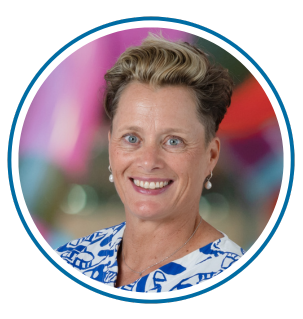
CTF Australia welcomes the opportunity to introduce Kylie Clark to our NF community. Kylie coordinates the multidisciplinary NF Clinic at The Royal Children’s Hospital (RCH) in Melbourne.
She manages the care of hundreds of young people living with NF and her interest in making the transition into adulthood care for young people with NF as smooth as possible has led to the development of a specialised NF-transition program at RCH in Melbourne.
You can read more about this ‘NF-Transition Program into Adulthood’ in CTF Australia’s post about her recent presentation at the NF Clinical Symposium 2025. We thank Kylie for her interview, where she shares what inspires her to support young people with NF and their families.
“I would like to see every teenager and young adult with Neurofibromatosis (NF) move through adolescence and into adulthood with confidence, autonomy, and continuity of care”
How did you become interested in NF?
I had completed my Nursing graduate year at The Royal Children’s Hospital on the neurology ward and the job opportunity came up. It sounded super interesting and challenging. I was certainly correct on both accounts!
What is the role of an NF Clinic Nurse Consultant in the hospital? Are there more specialist nurses like you in Australia?
My role is to plan and coordinate the care of over 500 patients and their families. I triage, assess, develop and implement patient care plans to enable improved outcomes. I have initiated a nurse-led triage system, which has reduced wait times within the Clinic, enabling NF patients and their families to have a point of contact and care prior to their initial appointments with consultants. This includes provision of timely referrals as required and counselling to ensure families feel connected, therefore mitigating the sometimes overwhelming gap between the patient and medical team. In my advanced nursing practice capacity, I review patients on stimulants to ensure efficacy, and follow-up patient on specific treatment protocols. I also facilitate transition to adult care.
I provide support to each family – this may include general parenting advice (!), medical and emotional support and provision of NDIS support. I refer to the Children’s Tumour Foundation regularly and provide vocational support as required.
I believe the NF Clinic at the Royal North Shore Hospital in Sydney has a similar role – possibly more focussed on adults. I am not sure if there is another paediatric NF Clinic Nurse Consultant in Australia. There are certainly many specialist nurses for other conditions.
Can you tell us more about the NF-clinic and its transition program at The Royal Children’s Hospital (RCH) in Melbourne?
The RCH NF transition program aims to make the transition to adult care as seamless as possible. We work with the RCH transition team and ensure all patients are referred to them at the age of 15. The year the patient turns 18, they attend a joined RCH / RMH Transition Day, where they meet Prof Kate Drummond – the NF lead at the Royal Melbourne Hospital (RMH). All patients are verbally ‘handed over’ by each RCH clinician to Prof Drummond. The complex NF patients have a one-on-one appointment with Prof Drummond and then join the entire cohort for an information session. The information session covers follow-up requirements, when to see a GP vs specialist care, what to look out for. Because NF is often a genetically inherited, family planning and how to access ongoing support is included in the session a well. We then conclude with a lunch where the patients and families can freely mingle with the clinicians and ask questions.
What will be the benefits for NF-patients and their carers?
The major benefit of the RCH NF Transition Program is that it provides a structured, personalised, and relationship-centred handover that ensures continuity of care, reducing the anxiety often associated with moving from paediatric to adult services. The face-to-face handover to the new adult care team at RMH builds immediate trust and familiarity, allowing patients and families to feel supported rather than “transferred.”
Families leave the day with a clear understanding of ongoing follow-up requirements, red-flag symptoms, family planning consideration, and how to access appropriate support.
Socially, the informal lunch and open discussion increase confidence by normalising transition and empowering young people to engage directly with their new care team. This safeguards clinical continuity while nurturing emotional readiness, empowering young adults with NF to navigate adult care safely and confidently.
What is the your biggest challenge? Can you explain some of the issues you are facing while implementing the program?
The biggest challenge is participation and getting the families to attend! The NF cohort can sometimes be a little ‘unorganised’, so it takes a lot of background work to ensure attendance. To mitigate this, we ensure patients have the option to ‘attend’ the information session via Telehealth.
Are researchers (in Australia and beyond) also interested in this initiative and do you work together?
I believe that other hospitals provide transition in other ways, although I am not aware of the details. I have not worked with any researchers regarding this program, but I am interested in researching and providing evidence of the efficacy of the program.
What would you like to see happen for teenagers & young adults with NF in the future?
I would like to see every teenager and young adult with Neurofibromatosis (NF) move through adolescence and into adulthood with confidence, autonomy, and continuity of care — supported by a system that understands both the medical and psychosocial dimensions of their condition.
Clinically, this could mean a standardised transition pathway embedded in every paediatric NF service, with early preparation (age 12–14), consistent transition readiness assessments, and co-designed care plans involving young people, families, and both paediatric and adult health providers. Data from each transition could feed into a national NF registry, creating a feedback loop for service improvement and research.
Holistically, it would be great to see psychological support and vocational guidance built into NF clinics — normalising discussions about body image, relationships, fertility, and mental health.
Digitally, a shared care platform or app could allow families and adult clinicians to access key history, imaging, and education resources in real time.
You can read a summary of Kylie's presentation titled ‘Neurofibromatosis in early adulthood-A brief guide’ aimed at Patients and Carers here.
Or you can also read a summary of Kylie's presentation with more scientific detail aimed at Health Care Professionals here.
Thank you to Kylie for taking the time to answer these questions and to give us insight into the important work she is currently doing.
Thank you also to our wonderful volunteers, Anke van Eekelen and Alexa Brown for conducting these interviews and helping to summarise the research and presentations from the 2025 NF Clinical Symposium.
Share this article