Get to know NF Researchers in Australia - Dr Kiymet Bozaoglu
November 28, 2025
Get to Know NF Researchers in Australia
A series of interviews with speakers at the NF Clinical Symposium 2025
Dr Kiymet Bozaoglu PhD
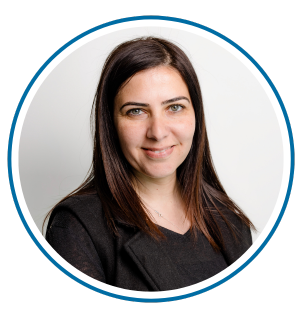
CTF Australia welcomes the opportunity to introduce Dr Kiymet Bozaoglu to our NF community. Dr Bozaoglu is a molecular biologist and Team Leader in the Neurogenetics Laboratory at the Murdoch Children’s Research Institute in Melbourne, affiliated with the Department of Paediatrics and the University of Melbourne. Her work aims to better understand the biological mechanisms at the DNA and cellular level which play a role in neurodevelopmental challenges faced by people with NF1. In 2024 she received a New Investigator Award from the US Department of Defense’s Neurofibromatosis Research Program to support her research.
You can read more about the stem cell modelling program presented by Kiymet at the recent NF Clinical Symposium 2025 in a post by CTF Australia. We thank Kiymet for this related interview, where she shares what inspires her to help people with NF1 facing cognitive, behavioural and learning challenges in life.
“By applying advanced molecular and stem-cell technologies, we can delve deeply into the biology, pinpoint what is going wrong, and ultimately identify strategies to prevent or improve these difficulties”
Why did you become a scientist and what triggered your interest in NF-related research?
I have always been driven by curiosity — particularly about how our genes work and why changes in them can lead to disease. have always been fascinated by the idea that if we can understand why a condition develops at the biological level, we can design better, more effective ways to treat or manage it, rather than relying on guesswork or one-size-fits-all approaches.
My interest in NF1 grew from my passion for neuroscience and understanding how the brain develops. I’ve spent many years studying how conditions like autism and ADHD arise, and why children develop differently. When I learned that around 80% of individuals with NF1 experience cognitive or learning challenges — and that this area has not been deeply explored — I felt this was a place where my skills could make a real difference.
NF1 is a single-gene condition that affects how the brain develops, yet the mechanisms behind those neurodevelopmental challenges remain poorly understood. By applying advanced molecular and stem-cell technologies, we can delve deeply into the biology, pinpoint what is going wrong, and ultimately identify strategies to prevent or improve these difficulties.
For me, this work is meaningful not only because of the scientific challenge, but because it has the potential to genuinely improve the quality of life for children and families living with NF1. That possibility is what motivates me every day.
Can you tell us about the NF1 research project you are leading at the Murdoch Children’s Research Institute in Melbourne?
We have created a research program that aims to understand why children with NF1 experience learning, attention, and developmental challenges — and how we can treat them more effectively.
Our work connects clinical data from children with advanced laboratory models. In the lab, we use stem cells donated by individuals with NF1 to grow into 2D nerve cells and/or 3D cerebral organoids.
These models allow us to recreate early brain development and see exactly how NF1 changes the way brain cells grow, communicate, and form circuits.
We then use cutting-edge tools — including imaging, electrophysiology, and gene/protein analysis — to pinpoint the pathways that are disrupted. Once we know the mechanisms, we test potential medications in these human models to see which ones correct the underlying problems. Simply put, our ultimate goal is to understand the biology → identify treatments → improve life for kids with NF1.
How will NF1-patients be able to benefit from your preclinical research focus?
Our goal is to transform the way we diagnose and treat neurodevelopmental challenges in NF1. At present, treatment approaches rely heavily on trial-and-error: strategies that help one child may not help another, and there are no therapies that directly address the underlying biological causes.
By uncovering the mechanisms that lead to neurodevelopmental differences in NF1, we aim to:
· Identify biological markers that can help predict which challenges a child may face.
· Develop personalised, mechanism-based treatments, rather than broad or non-specific interventions.
· Accelerate the path to new therapies, by testing promising compounds in human stem-cell models before they reach clinical trials.
· Provide families with clearer, science-driven guidance about the nature of NF1-related cognitive and behavioural differences.
· Ultimately, this research is about giving clinicians and families better tools, better knowledge, and, in time, better treatments that can improve everyday functioning and quality of life.
Have you been able to published your work to share your findings?
Yes. We have already published key foundational work that supports our program in a stem-cell resource paper describing the generation and characterisation of four NF1 patient-derived iPSC lines.
We have recently also submitted a second stem-cell resource manuscript describing six additional patient-derived iPSC lines, along with gene-corrected isogenic control lines. These tools are the foundation for discovering the mechanisms behind NF1-related brain changes.
What is the your biggest challenge in stem cell research? Are there potential barriers to translation of your laboratory research into clinical use?
The biggest challenge is funding. Stem-cell research is technically demanding and resource-intensive. Limited funding restricts the number of experiments we can perform and the personnel we can support, both of which slow down the progress we can make.
Despite this, the pathway to translation is strong. Human stem-cell models allow us to test therapies in patient-specific systems with high accuracy. The main barrier is ensuring we have the sustained investment needed to scale the work, validate findings, and move promising treatments toward early-phase trials.
Are other researchers (in Australia and beyond) also interested in this initiative and do you work together?
Yes — there has been significant interest nationally and internationally. After presenting our platform at the NF1 conference in Washington DC and at the Children’s Tumour Foundation meeting in Sydney, we received strong national and international interest. We’re already collaborating with researchers in Sydney and Belgium and are in discussions with teams in the US and Canada. This enthusiasm highlights the global need for deeper biological understanding of NF1 neurodevelopment.
What would you like to see happen for basic science research into NF?
I would like to see a strong investment in understanding the fundamental mechanisms that contribute to neurodevelopmental challenges in NF1. These challenges affect the majority of individuals with the condition, yet remain the least understood and the least targeted by current therapies.
With more support for basic science research, we can uncover the mechanisms causing these challenges and will allow us to move away from trial-and-error management towards precision, mechanism-based care. Ultimately, this approach has the potential to greatly improve outcomes for children and families living with NF1.
You can read a summary of Dr Bozaoglu’s presentation titled ‘Exploring NF1-patient specific processes of brain development using their own unique stem cells’ prepared for Patients and Carers here.
Or read a summary with more scientific description for Health Care Professionals here.
Thank you to Dr Kiymet Bozaoglu for taking the time to answer these questions and to give us insight into the important work she is currently doing.
Thank you also to our wonderful volunteers, Anke van Eekelen and Alexa Brown for conducting these interviews and helping to summarise the research and presentations from the 2025 NF Clinical Symposium.
Share this article