Towards treating weak bones in NF1 and preventing tumours in NF2
August 17, 2026
A research summary for patients and carers
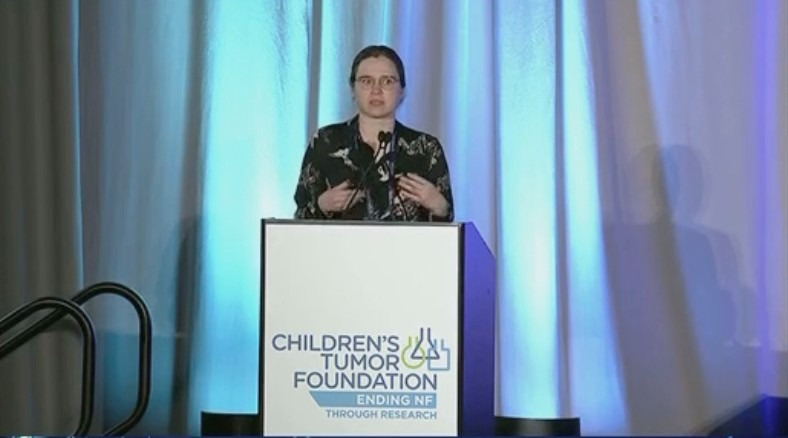
The information provided below is a combined summary of two presentations by Dr Alexandra O’Donohue at the 2026 NF Conference in the United States.
Click here to read the summary for Health Care Professionals
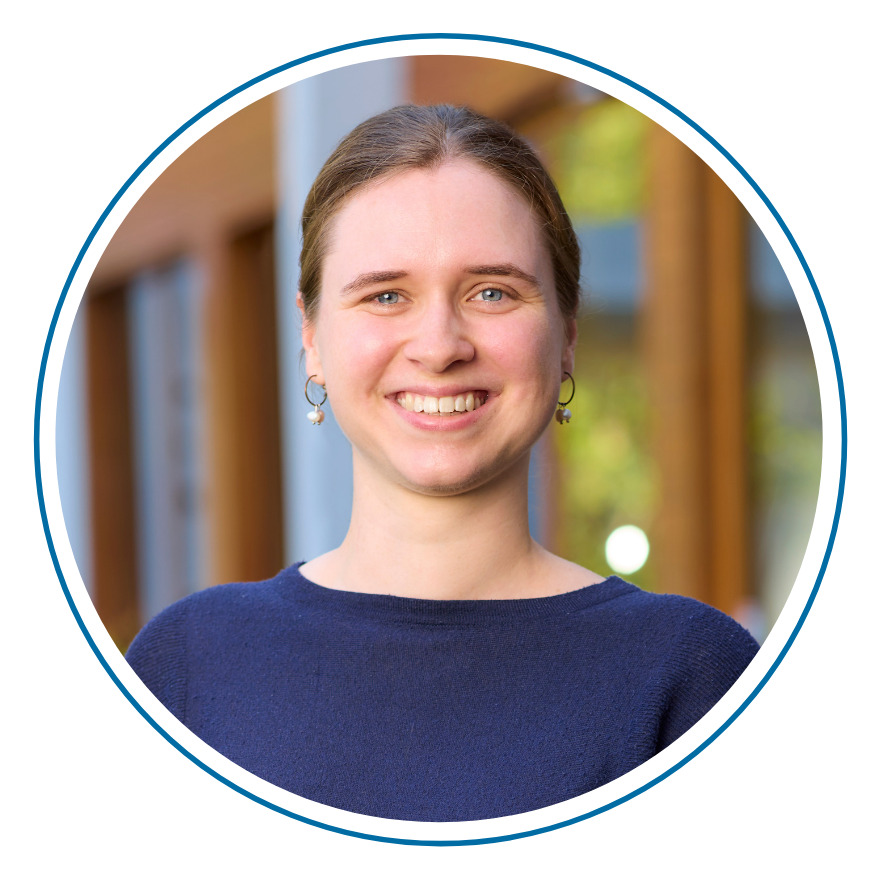
Dr O’Donohue is a Postdoctoral Research Fellow in the Bioengineering & Molecular Medicine Laboratory at the University of Sydney, located at The Westmead Institute for Medical Research and The Children’s Hospital at Westmead in Sydney.
She currently leads a team to develop gene therapy to prevent NF2-associated vestibular schwannomas. This work can potentially lead to the reduction or even prevention of tumour growth in NF2-SWN. Dr O’Donohue received a Young Investigator Award by CTF USA in 2025 to fund this research.
She also has a research interest in bone density complications as part of musculoskeletal issues in patients with NF1. This line of research tests whether dietary intervention can rescue bone loss in patients with NF1.
Towards treating weak bones in NF1
How can bone loss be a problem for children with NF1?
Bone problems during child development are likely to influence proper growth and impact on physical function of a child. Possibly up to 50% of young NF1 patients may have issues with their bones.
In 2007, a children’s cohort study on bone density showed that about a third of children with NF1 were osteopenic. This means that their bones are typically thinner and weaker. It is an early sign of overall bone complications, which can lead to more severe bone cell loss (osteoporosis) if not addressed.
Why is a presentation on bone loss in NF1 included in a conference session on metabolism?
Metabolism throughout the body relies on energy production to grow and function. When metabolic issues influence a person’s health, they are generally caused by errors in the energy production process within cells of specific tissues or organs.
Metabolic dysfunction in NF1 can present itself in various ways, and lower body weight and smaller stature are relatively easy to spot when a patient with NF1 is affected.
It is more difficult to detect issues within the body. For example, reduced muscle mass or bone weakness often only become apparent when delays in motor development, challenges with physical activities or skeletal deformities (like scoliosis of the spine or pseudo-arthritis of the tibia in the lower leg) occur.
How did research into metabolic problems in NF1 start?
Earlier research in NF1 by Associate Professor Aaron Schindeler, Dr O’Donohue’s mentor and colleague, focused on the muscle implications of NF1 loss. He and his team created a very useful research model for this study: an experimental mouse line which was genetically modified so that its muscle and bone tissue would resemble aspects of a NF1 patient. When muscle tissue of these mice were analysed under a microscope, the researchers saw that there was unusually high amount of fat storage in their muscle cells compared to healthy mice.
This stored fat was mostly made up of long-chain fatty acids. Fats, or lipids, are required for energy production in the mitochondria (the ‘engine room’) of the cell, but these long-chain fatty acids were getting stuck. This same fat accumulation was confirmed in muscle tissue from NF1 patients. A lack of available long-chain fatty acids in mitochondria may cause a lack of fuel to produce energy in the cell to function, grow and multiply.
What is wrong with muscle & bone when a child with NF1 has metabolic dysfunction?
The research team discovered that a naturally occurring molecule in the cell could correct the error in energy production. This molecule is called carnitine and it helps move fat into the mitochondria of the cell.
From other lipid storage disorders and body building powders, we know that L-carnitine can be added to a diet as a supplement. Dr O’Donohue and her colleagues used this knowledge and discovered that a diet modified with L-carnitine could improve both muscle weakness and partly recover bone density issues in the NF1-like mice.
A small safety clinical trial in children with NF1 showed that diet supplementation with L-carnitine could rescue muscle weakness and fatigue, and now a larger study is ongoing. Bone complications were not considered in these clinical studies.
What’s next?
Dr O’Donohue notes that future human clinical trials could consider measures of skeletal bone, to see if the children with NF1 on the modified diet also develop stronger bones. In the future, this may lead to an interventional option to strengthen the skeleton and improve the quality of life of patients living with NF1.
Her vision is supported by other speakers at the conference with an interest in NF1 bone health, who agree that bone abnormalities are significant in NF1. They are of serious concern in daily life, and the time is right for more research to translate new outcomes into practice.
Towards preventing NF2-related tumours
How can gene therapy help patients with NF2-SWN?
Generally speaking, gene therapies aim to correct a mutated gene at the DNA level to address the root-cause of a genetic disorder. In the case of NF2-SWN, a correction of the NF2-gene should prevent the cells from further growing and multiplying uncontrollably into NF2-linked tumours.
NF2-related vestibular schwannomas are the most common type of tumour in NF2-SWN. Mutated Schwann cells grow gradually into tumours that surround the nerve responsible for hearing. These tumours may be benign but over time they tend to compress the nerve, leading to loss of hearing, imbalance, and sometimes facial paralysis. However, due to the many years this may take, there seems to be a window of opportunity for early intervention with gene therapy.
CTF-USA recognised the potential of this research project and awarded Dr O’Donohue with 2025 Young Investigator funding to progress her study.
How can an error in the DNA code be corrected?
Gene therapy can be achieved in different ways. The easiest corrections to imagine are that either a correct copy of the gene is added to the cell, or that the mutated gene is specifically changed (edited) to remove the error in its DNA code.
Dr O’Donohue and her team chose to use the ‘gene editing’ version using a cutting-edge technology called CRISPR base editing. Her highly advanced strategy was designed to create just a single change in the NF2-gene, fixing the patient’s gene error. This change will restore the cell’s normal function.
What are the challenges in developing gene therapy for NF2-SWN?
Developing gene therapy is not easy and far from a straightforward scientific undertaking. Gene therapy for NF2-SWN is still in its infancy and there are many hurdles to overcome. It is an ongoing process.
- CRISPR Gene Editing construct design
The initial task of designing a tailor made CRISPR-construct to ‘gene edit‘ a faulty NF2-gene is complete. Dr O’Donohue succeeded in creating a tailor made CRISPR gene editing construct to correct a prevalent NF2-SWN mutation known to be responsible for tumour growth in patients.
- ‘Gene editing’ accuracy
Dr O’Donohue is now challenged with checking the accuracy of the correction and optimising its efficiency in lab-grown cells and animal models. These models were also specifically developed and created for this project. They mimic the genetic make-up of an NF2-SWN patient.
- Delivery of foreign material into Schwann cells
Another important intricacy is how to deliver these CRISPR constructs into the complex and difficult to reach Schwann cells. This involves identifying a suitable delivery vector. A helpful analogy for this is that of a parcel delivery, where the CRISPR construct is the package and the delivery van is the vector. How can we get this package to the correct address?
Dr O’Donohue is collaborating with Associate Professor Samantha Ginn from the Gene Therapy Research Unit at Westmead to experiment with different viral and non-viral vectors, which they aim to optimise for delivery of the newly developed ‘gene editing’ construct.
What’s next?
It may still be a long time coming, but gene therapy research promises to help NF2-SWN patients in a unique and technically innovating way.
Nevertheless, it is not lost on Dr O’Donohue that a balance needs to be achieved between treatment success versus safety and cost. Progress in this field will equally benefit from NF2-SWN patients’ understanding and their outlook on future use of this cutting edge approach to tumour prevention.
This article was written by
Anke van Eekelen
Research volunteer

Share this article