Research aimed at treating porous bones in NF1 & preventing tumours in NF2
August 17, 2026
A research summary for Health Care Professionals
The information provided below is a combined summary of two presentations by Dr Alexandra O’Donohue at the 2026 NF Conference in the United States.
Click here to read the summary for patients and carers.
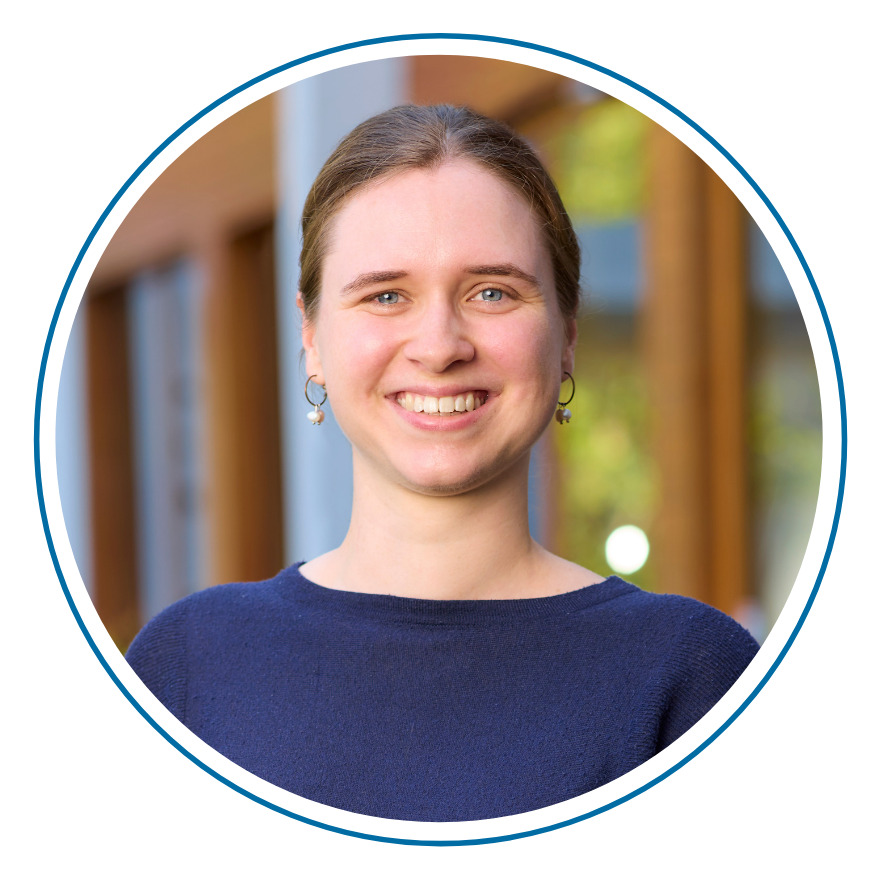
Dr O’Donohue is a Postdoctoral Research Fellow in the Bioengineering & Molecular Medicine Laboratory at the University of Sydney, located at The Westmead Institute for Medical Research and The Children’s Hospital at Westmead in Sydney.
She is motivated to progress research so that future treatments can ease the burden of bone weakness in patients with NF1 and tumour growth in NF2.
Towards treating porous bones in NF1
Dr O’Donohue has a research interest in complications around bone density and musculoskeletal issues in patients with NF1. As part of a special conference session on altered metabolism this year, she was invited to speak about her research in which she tested whether dietary intervention can rescue changes to bone porosity in NF1 patients.
Generally speaking, metabolic dysfunction in NF1 can present itself in various ways, among which lower body weight and smaller stature can be relatively easy to observe. Instead, internal issues with muscle mass and bone weakness often only become apparent when, for example, delays in motor development, challenges with physical activities or skeletal deformities, like scoliosis of the spine or pseudo- arthritis of the tibia, occur.
Bone problems are likely to affect proper growth and physical function of a child and are seen in about 10-50% of young NF1 patients. In 2007, a paediatric cohort study on bone density showed that approximately a third of children with NF1 were osteopenic. This means that their bones are generally thinner and less dense. It is an early sign of overall bone weakness which can lead to more severe bone cell loss (osteoporosis) if not addressed.
Earlier research on muscle weakness in NF1 by Associate Professor Aaron Schindeler, Dr O’Donohue’s mentor and colleague, focused on creating a new study tool: mouse models in which a lack of neurofibromin (the underlying cause of NF1) could be genetically manipulated in skeletal muscle only, or specifically in their limbs to target muscle and bone. Knocking out NF1 in muscle led to an accumulation of long-chain fatty acids in muscle cells, an observation then confirmed in muscle biopsies of NF1 patients.
The accumulation of long-chain fatty acids in the cells suggested an inability of the fatty acids to cross into the cell’s mitochondria, the ‘engines’ of the cell where vital metabolic energy is produced. Insufficient amounts of long-chain fatty acids in mitochondria may cause a lack of fuel to produce energy to function, grow and multiply.
An amazing next series of experiments revealed a crucial role for carnitine in this process. Carnitine is a molecule necessary for the transport of long-chain fatty acids into the mitochondria. L-carnitine had previously been used in lipid storage myopathies and is actually commonly used in body building powders. This inspired the team to feed NF1-like mice with an L-carnitine modified diet, and follow their development for 8 weeks. At the end of the study, muscle function appeared strengthened, with a 71% reduction in fat accumulation within the cell.
Even more exciting, in 2021, an initial small clinical trial testing L-carnitine diet supplementation in six children with NF1 suggested that muscle weakness and fatigue can also be improved in patients in a meaningful way.
Dr O’Donohue took this outcome another step forward. She wondered whether NF1-related bone porosity could also be restored with L-carnitine? Investigating the bones from the same muscle study in mice, she looked at key bone measurements including bone volume, cortical thickness, mineral density, and pore size.
She found that the L-carnitine diet did positively affect the bone porosity in NF1-like mice, as well increase both tissue mineral density and cortical thickness.
Human trials focused on L-carnitine intervention for muscle weakness and fatigue in NF1 are continuing and Dr O’Donohue notes the inclusion of bone metrics in future studies could be considered. This may lead to a potentially new treatment option for bone complications in NF1 and will contribute to a better quality of life for patients living with NF1.
Other speakers at the conference with an interest in the skeleton of NF1 patients also encourage more research into bone health. According to Dr Laura Klesse, a paediatric oncologist in the USA, bone abnormalities are significant in NF1 children as well as adults; they are a considerable source of morbidity with limited therapy options. Work by Dr Florent Elefteriou from the USA tries to progress our understanding of the biology underlying bone-related complications and tests compounds (other than L-carnitine) to specifically improve bone mineral density in NF1.
Towards preventing NF2-associated tumours
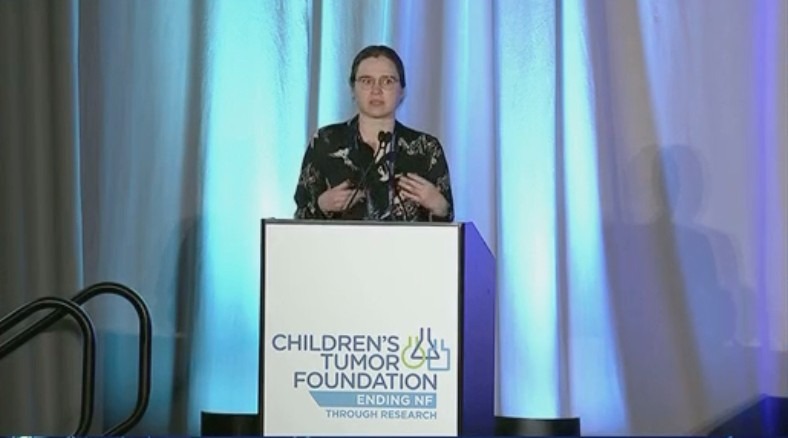
Dr O’Donohue also leads a team of researchers developing gene therapies to prevent NF2-related vestibular schwannomas. This work can potentially lead to a reduction or even prevention of tumour growth in NF2-SWN. She received a Young Investigator Award by CTF USA in 2025 to fund this research and presented an update at the 2026 NF Conference.
Developing gene therapy for NF2-SWN is not an easy or straightforward task. Research in the area is still in its infancy and there are many challenges ahead. But if successful, the benefits are believed to outweigh the hurdles in this scientific undertaking.
NF2-related vestibular schwannomas, the most common type of tumour in NF2-SWN, grow gradually into tumours on the 8th cranial nerve innervating the ear. The tumours are benign but over time tend to compress the nerve leading to loss of hearing and imbalance. The lead-up to these adverse outcomes often takes years, which could provide a window of opportunity for early intervention with gene therapy targeting Schwann cells, the cells from which the tumours arise.
There are various technical ways to correct the mutation in the gene, which encodes for tumour suppressor protein Merlin in NF2-SWN. Dr O’Donohue prefers the approach of ‘gene editing’ using CRISPR base editors. This strategy is designed to make a single change at the DNA level to correct the implicated mutation. As a result of the small but specific correction within the target gene, a return of normalised protein levels of Merlin in the Schwann cells should stop their ability to grow uncontrollably into tumours.
As the start of a stepwise process, a CRISPR gene editing complex is designed so that the system is guided to the NF2 gene, then binds itself over the mutation site and repairs the faulty mutation. With the correct base in place, the gene code can be read and express a properly functioning Merlin protein.
Up next are careful considerations around how to bring this tailored CRISPR construct into the affected Schwann cells. How well can a chosen delivery vector enter these cells and how efficiently does it correct the mutation? What more complex preclinical animal models can be used to test its efficacy?
Dr O’Donohue is currently answering these questions, for which extensive basic research is needed. Similarly, safety is always at the forefront, so she is also verifying no other changes are occurring either close by (bystander effects) or in other regions of the genome that are similar to the correction site (off-target effects).
She is acutely aware that there is still a long road ahead, but she has made some significant steps forward. Her preclinical work to specifically test her designed NF2-SWN CRISPR construct in lab-grown cell lines and mouse models that mimic the NF2-SWN patient mutation is encouraging and progressing. At the same time, she is collaborating with Associate Professor Samantha Ginn from the Gene Therapy Research Unit at Westmead to use a specific recombinant adeno-associated viral vector (rAAV) optimised as a transporter into Schwann cells.
Gene therapy research promises to help NF2-SWN patients in a unique and technically innovating way. Though it is not lost on Dr O’Donohue that a balance needs to be achieved between treatment success versus safety and cost. Progress in this field will equally benefit from NF2-SWN patients’ understanding and their outlook on future use of this cutting-edge approach to tumour prevention.
This article was written by
Anke van Eekelen
Research volunteer

Share this article