The power of routine health surveillance & transition of care in NF1
September 27, 2026
A research summary for Health Care Professionals
The information provided below is a combined summary of two presentations at the 2026 NF Conference in the US, selected by Dr Yemima Berman for communication to the NF Community in Australia
Click here to read the summary for patients and carers.
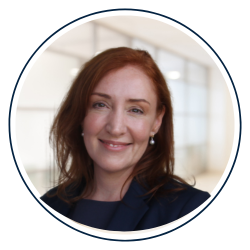
Dr Yemima Berman is a Clinical Associate Professor and Head of Department of Clinical Genetics at the Royal North Shore Hospital. Her department includes the NF Clinic in Sydney, where NF treatment and management is supported by a team of clinical geneticists, neurologists, dermatologists, genetic counsellors and clinical nurse specialists working together to deliver a multi-disciplinary approach to NF patient care.
Dr Berman attended the 2026 NF Conference in person and we thank her for the recommendation to cover two inspiring presentations with a focus on research & development of improved health services for NF patients in this series.
Both presentations were part of the ‘Clinical Care Program’, a session organised by NF specialist clinicians for clinicians at various stages of their career and an interest to learn more about NF.
Better routine health surveillance for people with NF1 in primary care
If the spectrum of medical research starts in a lab with basic science, it ends with translation of innovations into practice and bringing them to the people. Dr Vanessa Merker is a health services researcher at Harvard University and her focus is exactly on this very last step: improving routine health surveillance for NF1 in primary care, where GPs and local health care professionals are the patient’s first point of call.
She delves into how new knowledge on best practice in NF1, guides and recommendations for effective treatment and disease management, can be best applied in primary care. Her interest is not just studying how effective this process is, but also how widespread, equitable and accessible any new approaches to better care are.
In her latest research, she set out to study where the gaps are and how to fix them. This to ensure that all NF1 patients receive high-quality, safe and affordable NF1 care.
Her team in Boston developed a guide called ‘My NF Guide’ and tested its usefulness. The guide aims to overcome the issue that NF clinics across the US with comprehensive screening programs serve only about 29% of NF1 patients and various circumstances can explain a lack of access to specialised NF care. It was clear though that those who had not visited a NF clinic as part of their care received fewer NF1 screenings for optimal monitoring of NF1 progression.
‘My NF Guide’ is an online tool that can teach NF1 patients as well as their local GPs about up-to-date best practice. The patient-centred guide was carefully developed with input from patients, parents and primary care practitioners to understand the many needs and preferences. In turn, a pilot study allowed for optimisation of its real-life use.
Upon completion of an online intake form with medical history information, in essence, ‘My NF Guide’ produces two letters for the patient to take to an annual check-up visit:
- A simple but personalised checklist for the patient and an informative overview of how NF1 can affect a patient for better understanding of the potential complications of NF1.
- A letter for the primary care practitioner with a checklist on what is recommended to look for, to do and what to follow up.
The study findings showed an increase in NF1 surveillance. This means that the personalised guide to stay on track according to best practice has added value over standard reminder letters. This was particularly the case for patients not within reach of a specialised NF-clinic. The guide’s patient-driven feature has the ability to boost confidence in the primary care they receive irrespective of where they live in the US.
The development of the ‘My NF Guide’ for NF1 patients in the US was shaped by similar guides available in Australia. The NF clinic at the Royal North Shore Hospital provides freely available online review checklists for children and adolescents with NF1, while the Nord Sydney Local Health District provides a review checklist for adult NF1 patients. They all present overviews of potential symptoms a NF patient may develop, what to look out for and what medical follow up may be required. The difference with ‘My NF Guide’ in the US would be that these Australian guides are more generalised, notably missing the helpful personalised touch incorporated by Dr Merker.
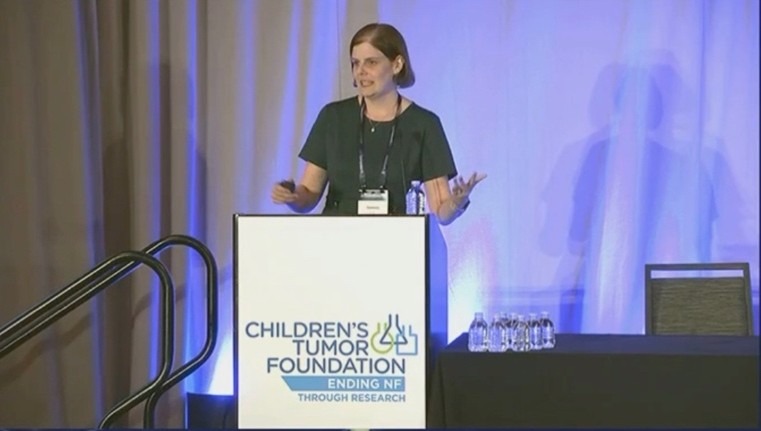
Speaker at the 2026 NF Conference: Dr Vanessa Merker
The benefit of a ‘Transition of Care’ program in NF1 seems unmistaken
‘Transition of Care’ in NF1 was the topic of discussion by an expert panel of adult neurologists and facilitated by Dr Angela Hirbe (Washington University in St Louis, Missouri) and Dr Tena Rosser (The Children’s Hospital in Los Angeles, California). These two women leading ‘Transition of Care’ programs at their institutions used anonymised patient cases to illustrate the benefits and barriers to effective transition of NF1 care from the paediatric to the adult clinic.
This is an area of interest to the NF community in Australia and it was exciting to hear about similar issues faced and some novel approaches debated by US specialist clinicians.
NF1 care of children and adolescents differs greatly from adult care in the sense that the paediatric care model is generally family-centred with shared decision-making, often has more opportunities for a multi-disciplinary approach to care, coordinated access to support services and guidance to enhance adherence to care. In the adult care model for NF1, patients have to rely on self-management of all these aspects, previously offered under a ‘one-stop shop’ banner in the paediatric clinic.
One of the most challenging aspects of transitioning into adult care seems to be the referral to new adult care clinicians and expectations of taking responsibility of their own continued care. This is even harder in the absence of access to a specialised NF clinic. The cases presented illustrated what we know works and where a move to adult care can fail.
A successful example of transitioned care was mostly driven by a start to talk about transition early in adolescence. This allowed for a gradual introduction to the young patient’s understanding of the medical history, a stepwise process to independent care management, the preparation of personal goal setting over time and a transition plan, as well as the opportunity to meet the adult physicians before transition would happen.
The panel raised concerns when transition of care was left too late, closer to the generally accepted age of maturation at 21 years. The window of opportunity to develop self-management skills and to learn about the potential complexity of ongoing treatment during adulthood seemed passed. These are likely the NF1 patients that slip through the cracks and the room collectively seemed to estimate that 25-50% of young patients become lost to follow-up.
The examples may have been anonymised US patients, but the concerns and consequences for adult NF1 patients missing out on continued monitoring of disease progression and treatment by specialist clinicians seems universal.
The ‘Transition of Care’ model presented by Drs Hirbe and Rossen showed many similarities with transition models at the NF clinics in Sydney and Melbourne. Details of the ‘Transition of Care’ program at the Royal Children’s Hospital in Melbourne were presented by Kylie Clark, at the 2025 NF Specialist Day in Sydney.
Interestingly, the success of the US program at Washington University in St Louis includes therapy programming focussed on community building. To increase a sense of belonging, their NF Clinic coordinator organises ‘Camp NF’, ‘Club NF’, a ‘Totally Teen’ online platform and ‘NF Family Day’. These are familiar activities organised by CTF for our young NF patients in Australia to stimulate engagement with a supportive community. During adolescence they are believed to add to many positive impacts on life with NF1, and they may also help readiness for transition of care.
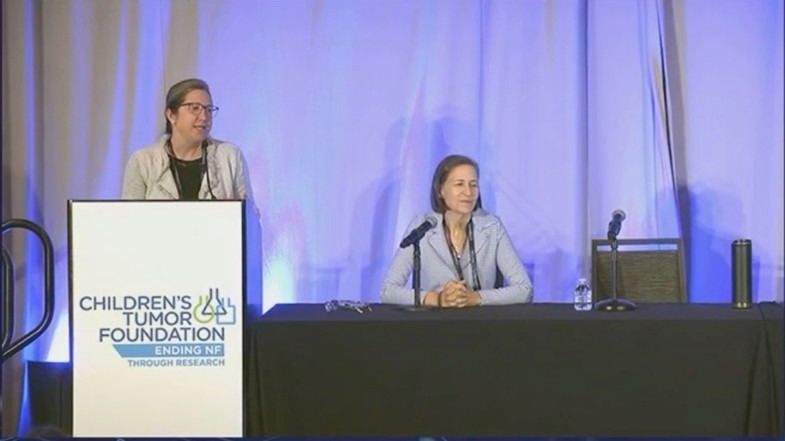
Panel discussion organisers at the 2026 NF Conference: Dr Angela Hirbe (right) and Dr Tena Rosser (left).
This article was written by
Anke van Eekelen
Research volunteer
Share this article